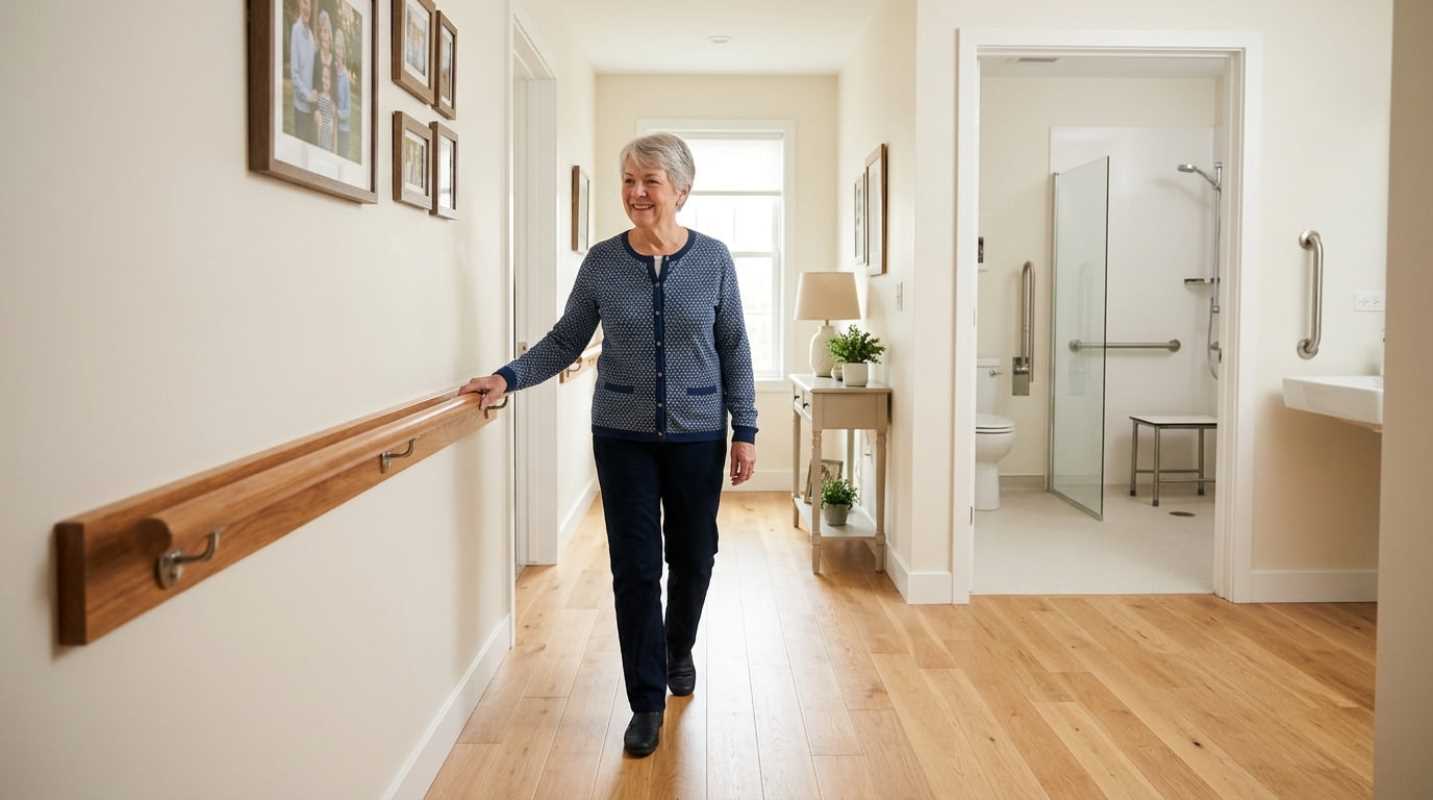
Have you ever walked into a room you have known for decades and suddenly realized the steps feel a little steeper? Maybe a door frame seems a bit tighter when carrying groceries, or you find yourself reaching for the wall to steady your balance in the hallway.
You are not alone. The a lot of majority of people want to stay in their own homes as they grow older. According to the AARP Home and Community Preferences Survey, between 75% and 82% of adults age 50 and older want to remain in their current spaces for the long haul.¹ It makes sense. Your home holds your memories, your routines, and your neighborhood connections.
Yet only about 10% of American houses have the basic universal design elements needed for long-term accessibility. That gap creates real risks. CDC data shows that more than one in four older adults falls each year, making accidental falls the leading cause of injury-related death for people over 65.²
Staying safe at home is about protecting your independence, your privacy, and your peace of mind. With a few practical modifications, you can make your living space dramatically safer without turning it into a sterile clinic.
Embracing Independence Through Smart Design
Think of home accessibility like preventative maintenance on a car. You change the oil before the engine warning light flashes, right? The same logic applies to your living space. Waiting for a slip, trip, or sprained ankle before making updates creates unnecessary stress.
Making smart design choices early gives you control over your space. When you take charge of your environment, you eliminate the daily friction that wears you down. A kitchen where you can reach the coffee mugs without standing on your tiptoes simply works better. A bathroom where you never worry about slick tiles lets you start your morning with confidence.
There is a huge psychological upside to this kind of planning. Living in a home that supports your physical needs preserves your dignity. You do not have to rely on family members or visiting helpers for simple daily tasks. You just live your life comfortably.
The Low-Hanging Fruit and Quick Wins in Every Room
You do not need a massive contractor budget to make meaningful safety upgrades this weekend. In fact, some of the most effective improvements cost less than a fancy dinner.
Start by taking a slow walk through each room and looking for simple, high-impact fixes
• Clear the walkways: Throw rugs are notorious trip hazards. Either roll them up entirely or secure every border with heavy-duty silicone rug tape. Keep clear pathways of at least 36 inches across your living areas so you never have to squeeze past bulky furniture.
• Upgrade to rocker light switches: Standard toggle switches can pinch stiff fingers. Replace them with wide rocker push switches. You can flip them on with a light nudge from an elbow or forearm when your hands are full.
• Swap out round door knobs: Traditional brass knobs demand a tight grip and wrist twist that can be painful for arthritic hands. Install lever-style handles instead. You can push them down effortlessly with a closed fist.
• Add swing-clear offset hinges: If an interior doorway feels tight, replace the standard hinges with swing-clear offset hinges. These move the door completely outside the doorframe when opened, giving you an extra two inches of passage without knocking down drywall.
• Light the floorboards: Pitch-black hallways invite nighttime stumbles. Plug in amber, motion-activated LED nightlights along baseboards from the bedroom to the bathroom to guide your steps after dark.
Prioritizing Bathroom and Kitchen Safety
Bathrooms are ground zero for residential falls. Wet surfaces, soap scum, and hard porcelain fixtures create a hazardous mix. Remodeling data from the National Association of Home Builders shows that bathroom updates are the top priority for homeowners preparing to age in place.³
Start with your toilet. Standard toilets sit around 15 inches off the floor. Upgrading to an ADA comfort-height toilet, which stands between 17 and 19 inches tall, drastically reduces the strain on your knees and hips when sitting down and standing up.
Next, get serious about grab bars. Throw away suction-cup models immediately. They can peel off smooth tile under real body weight. Instead, install metal grab bars anchored directly into structural wall studs, with a weight rating of at least 250 pounds. Place them at the shower entry, inside the bathing stall, and beside the toilet.
In the shower, switch to a handheld showerhead mounted on an adjustable slide bar. That allows anyone to rinse off comfortably while sitting on a stable shower bench. If a remodel is on the horizon, consider a curbless walk-in shower to remove the tripping ledge entirely.
In the kitchen, rethink your storage layout. Organize your cabinets around the "Power Zone." That is the sweet spot between your waist and your shoulders, roughly 24 to 48 inches above the floor. Store 80% of your everyday cookware, plates, and pantry staples in this band. You will avoid high-reaching and deep bending, both of which can throw off your equilibrium. Swap tiny cabinet knobs for wide D-shaped pulls that let your fingers slide through naturally.
Technology as Your Secret Weapon
Smart home technology is no longer just for tech enthusiasts. Today, these tools function as practical safety gear.
Voice-activated platforms like Amazon Alexa, Apple Home, or Google Nest allow hands-free environmental control. You can turn on living room lamps, adjust the thermostat, or double-check that the front door is locked without getting out of bed.
Video doorbells and smart deadbolts eliminate another frequent accident trigger: rushing to answer the door. Hustling across the house to greet a delivery driver causes countless unnecessary stumbles. With a video doorbell, you can check your phone, talk to the visitor, and unlock the front door from your favorite armchair.
Newer ambient radar fall-detection sensors also offer peace of mind. Unlike old-fashioned wearable pendants that people often forget to charge or wear to bed, wall-mounted radar units monitor room movement continuously without invading privacy.
If you are ready to update your space, these curated solutions provide high-impact accessibility and safety.
Planning for the Long Term
Pacing your home updates keeps projects manageable. You do not need to tackle every room at once. Begin with low-cost fixes like lighting and rug removal, move to hardware swaps, and then budget for larger structural changes as needed.
Remember that universal design does not have to look clinical. Modern accessibility products feature sleek finishes like matte black, brushed brass, and polished chrome. When installed thoughtfully, curbless showers and designer grab bars look like high-end luxury features that increase your home value.
The financial logic is undeniable. With median assisted living costs climbing past $5,500 every single month, spending a few hundred or even a few thousand dollars on home modifications offers an exceptional return. Most importantly, it lets you stay right where you belong: safe and independent in the home you love.
Sources:
1. 2024 Home and Community Preferences
https://www.aarp.org/pri/topics/livable-communities/housing/2024-home-community-preferences/
2. CDC: About Older Adult Fall Prevention
https://www.cdc.gov/falls/about/index.html
3. Practical Approaches for Aging-in-Place Remodels
https://www.nahb.org/blog/2025/06/practical-approaches-for-aging-in-place-remodels
*This article on Travado is for informational and educational purposes only. Readers are encouraged to consult qualified professionals and verify details with official sources before making decisions. This content does not constitute professional advice.*