Have you ever walked into your bedroom at the end of a long day and instantly felt claustrophobic? You want a relaxing escape, but instead, you are greeted by cramped walkways, cluttered nightstands, and a bed that swallows the entire room.
Urban apartments and modern houses often squeeze secondary bedrooms down to 70 to 120 square feet. Standard interior planning guidelines call for 30 to 36 inches of clear walking paths around major furniture. When your room is barely nine feet wide, hitting that baseline feels almost impossible.
The good news is that you do not need to knock down drywall to fix this. Making a tight room feel open comes down to visual tricks, intentional furniture choices, and smart spatial planning. When you remove visual boundaries, your brain perceives the room as substantially larger than it actually is.
Decluttering as the Foundation of Airy Living
Clutter is the quickest way to shrink an already compact bedroom. When your eyes register dozens of separate items sitting on dressers and tables, your brain feels boxed in. A clean, cohesive room feels calm because visual processing becomes effortless.
To reclaim that breathing room, start by rethinking where your everyday needs live. The goal is to clear every horizontal surface so the eye can travel freely across the room.
• Clear the surface planes: Keep dresser tops and bedside tables almost empty. Limit yourself to a single decorative piece or a book you are actively reading.
• Hide your cords: Exposed cables create unnecessary visual noise. Use adhesive clips along the back of furniture legs to keep cords out of sight.
• Adopt warm minimalism: You do not have to live in a sterile, icy white box. Instead, edit down your belongings and focus on pieces with warm, tactile textures that bring comfort without physical bulk.
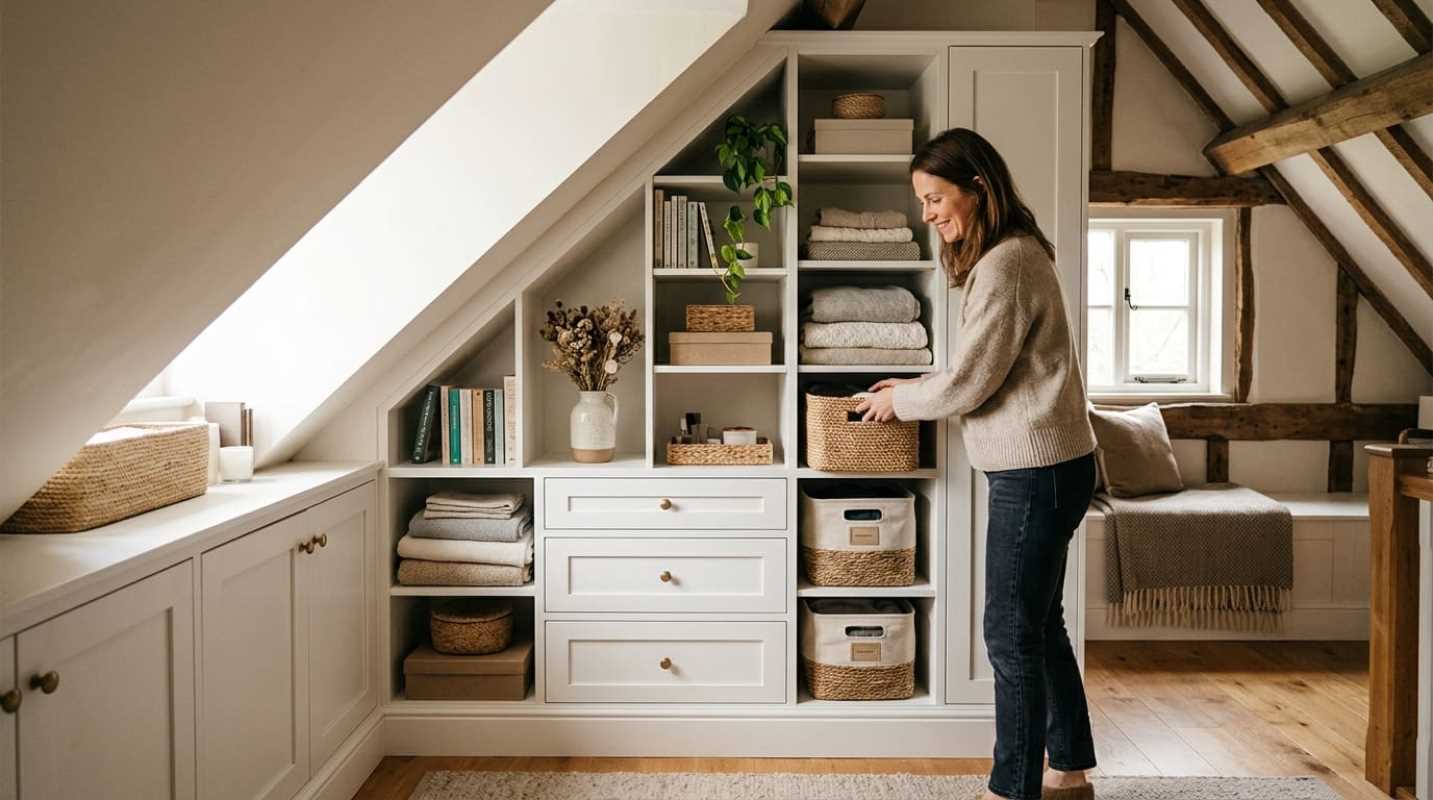
• Establish closed storage routines: Replace open shelving or rolling clothing racks with closed storage. When clothes and accessories remain behind solid doors, the bedroom immediately looks twice as tidy.
Mastering the Art of Furniture Placement
In a small bedroom, the way you place your furniture dictates how big the room feels. The human eye gauges a room's size primarily by how much continuous flooring is visible. Heavy furniture with solid plinths or drooping bed skirts blocks sightlines, making the floor look chopped in half.
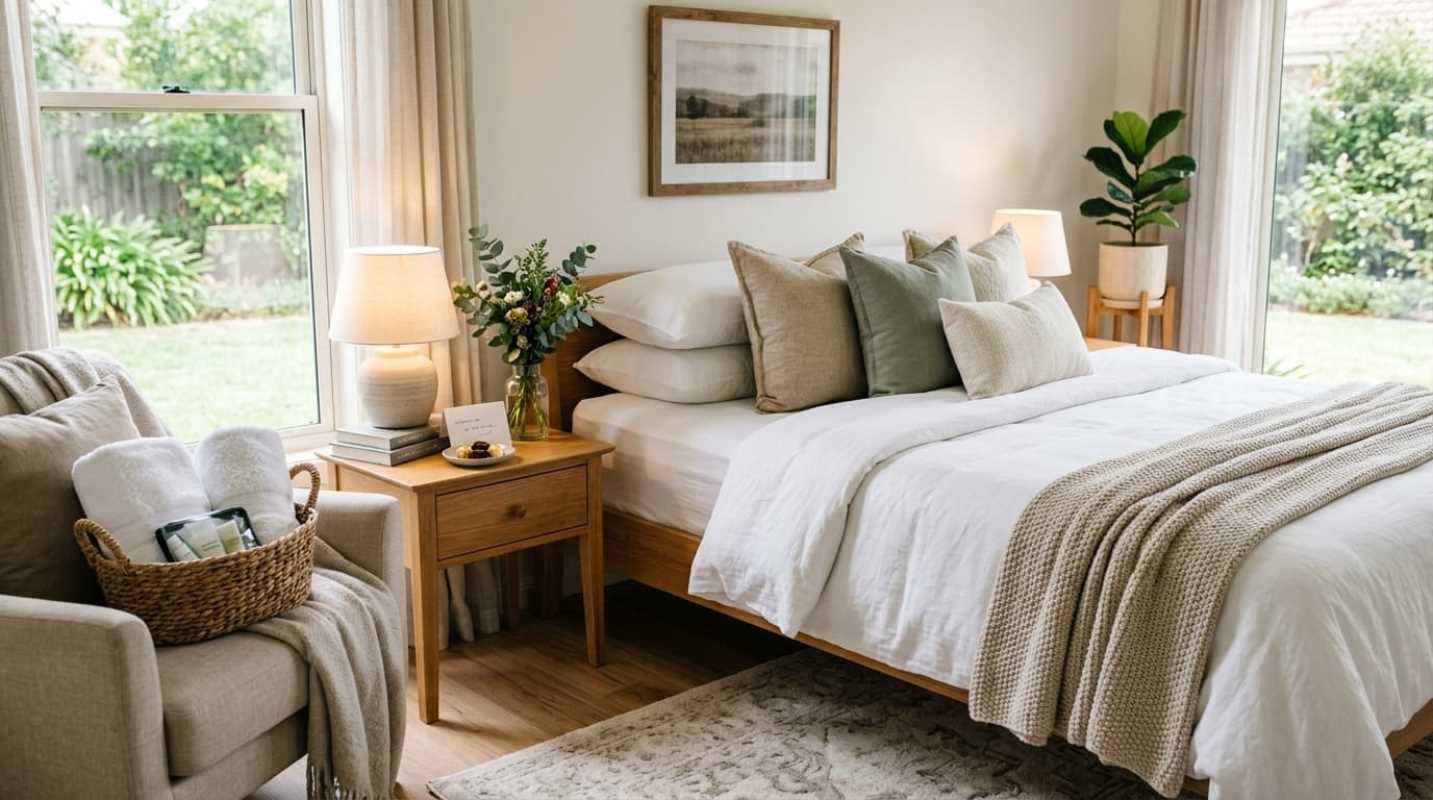
To counter this, choose leggy furniture. Beds, accent chairs, and tables with slim, tapered legs let daylight and continuous flooring flow underneath. That unbroken floor plane convinces your brain that the room is open and spacious.
Layout matters just as much as furniture design. Pushing your bed off-center against a far wall can free up a generous, uninterrupted pathway through the center of the room. If you share the bed and need access from both sides, float it on the main wall but eliminate wide bedside tables that crowd the walking paths.
You can also use vertical storage to pull the eye upward. Headboard bridge cabinets, where shallow flush wardrobes flank each side of the bed and connect over the headboard, take advantage of vertical space that usually goes unused. When painted the same color as the wall, these built-ins blend into the room's architecture while freeing up 15 to 20 square feet of floor space.
Lighting and Color for the Illusion of Depth
Color and lighting work together to reshape how you perceive boundaries in a room. One of the biggest design shifts in recent years is color drenching, which saw a 400 percent spike in homeowner searches in the Houzz Emerging Trends Report.¹
Color drenching means painting your walls, baseboards, doors, and trim in one single hue or tonal family. Traditional white baseboards cut horizontal lines across colored walls, drawing attention to exactly where the boundaries end. By wrapping the entire space in one tone, you blur the corners and trick the eye into seeing an expansive, continuous surface.
Trade clinical whites and cold grays for warm, light-reflective neutrals like soft alabaster, pale oatmeal, or muted sage. Then, paint your ceiling in an ultra-matte half-tint of your wall color. This softens the stark contrast between the walls and the ceiling, removing that boxed-in feeling overhead.
Lighting completes the optical trick. Relying on a single harsh overhead fixture casts shadows into the corners, making a room feel tiny and dark.
• Install wall-mounted sconces: Bulky table lamps eat up over half the surface area on a compact nightstand. Swap them for wall sconces or slender drop pendants to clear table space completely.²
• Layer your light sources: Combine warm, dimmable fixtures at different levels, such as low reading lights and diffuse overhead fixtures, to wash away dark shadows.
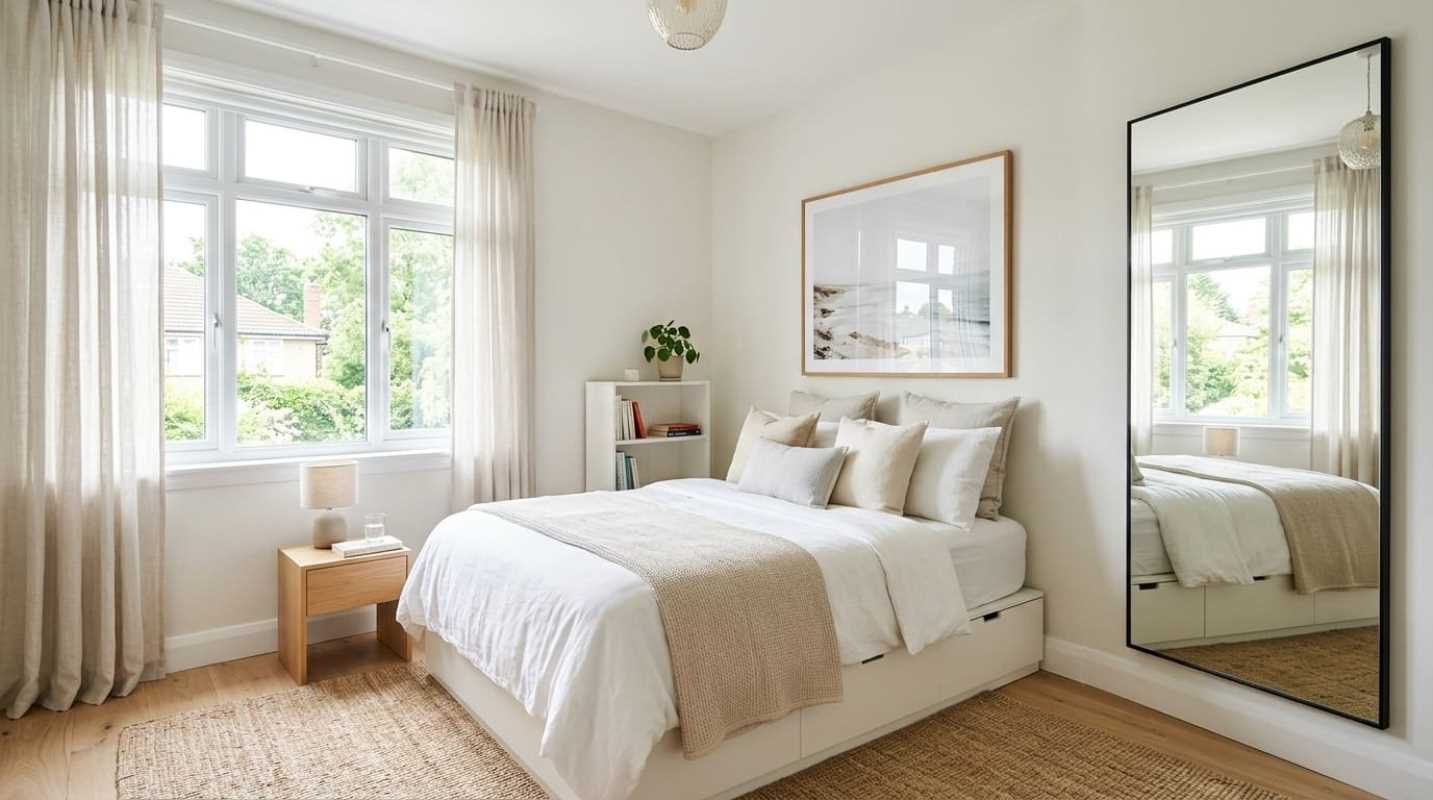
• Break mirror scale rules: Forget the outdated idea that a mirror should be tiny. An oversized six-foot floor mirror leaning against the wall doubles natural light and reflects sightlines, instantly making the room feel twice as deep.³
Smart Space-Saving Ideas for Every Corner
Every corner in a compact bedroom should serve your daily routine without creating physical chaos. By relying on wall mounts and lifting mechanisms, you can preserve valuable floor space.
• Floating nightstands: Wall-hung bedside drawers keep the floor completely clear below them, which makes your primary walking zone feel wider.
• Hydraulic storage beds: Standard under-bed pullout drawers require two to three feet of clearance on either side to open properly. A gas-lift hydraulic bed lifts the mattress upward, giving you the storage capacity of a large dresser without demanding extra side clearance.
• High and wide window treatments: Hang your curtain rods right beneath the ceiling molding and extend them eight to twelve inches beyond the window frame. Floor-to-ceiling drapes trick the eyes into seeing taller ceilings and much broader windows.
• Oversized area rugs: A tiny rug sitting at the foot of your bed breaks the room into disjointed sections. Choose a larger rug that tucks under the bottom two-thirds of the bed while leaving an even eight- to twelve-inch border of bare flooring near the walls.
• Single statement artwork: Avoid cluttering small walls with clusters of small, mismatched picture frames. One large canvas hung at eye level anchors the room and keeps the walls looking organized.
When furnishing a tight bedroom footprint, choosing the right space-efficient products makes a dramatic difference in day-to-day comfort.
Creating Your Personal Sanctuary
Living with a small bedroom does not mean you have to sacrifice comfort or personal taste. When you plan your layout carefully, a smaller room feels intimate and restful rather than confining.
Start with small changes. Mount a pair of reading sconces, swap your table lamps, or hang your curtains closer to the ceiling. Clear off your dresser, tuck away the cords, and let the floor show. With just a few smart design adjustments, your bedroom will quickly transform into the quiet, spacious retreat you deserve.
Sources:
1. 2025 U.S. Houzz Emerging Summer Trends Report
https://www.houzz.com/magazine/2025-u-s-houzz-emerging-summer-trends-report-stsetivw-vs~181721137
2. The 10 Most Popular New Bedrooms of 2025
https://www.houzz.com/magazine/the-10-most-popular-new-bedrooms-of-2025-stsetivw-vs~183828735
3. How to Make a Small Bedroom Look Bigger
https://www.bydesignandviz.com/post/how-to-make-a-small-bedroom-look-bigger