Have you ever walked through your front door after a long day, dropped your keys, and felt an immediate wave of irritation? Maybe you tripped over shoes piled right by the threshold. Maybe you looked around and could not find a single clean surface to set down your grocery bags.
For years, interior trends nudged us to build picture-perfect shows. People knocked down interior walls to create cavernous open spaces, filled shelves with matching vases, and picked furniture based on how it looked in photos. Living in a showroom gets exhausting very fast.
A house is an operating system for your daily life. When your rooms support your actual habits, your stress drops, and your daily schedule runs much more smoothly. You reclaim precious time each morning and evening. Functional design puts your real routine front and center.¹
Audit Your Daily Patterns to Fix Everyday Friction
Before you buy storage bins or rearrange heavy furniture, take a step back. Spend an entire day paying close attention to how you and your household actually move through each room.
Where do piles naturally form? Where do you find yourself pausing or feeling annoyed? Those trouble spots are friction points. If mail always stacks up on the kitchen island, it does not mean you lack discipline. It simply means you lack an effortless spot to drop paperwork the moment you enter the house.
To fix these snags, look closely at your highest-traffic areas
• The entry drop zone: shoes, coats, and work bags naturally dump right here, so give them sturdy wall hooks and open floor baskets right at the door.
• The kitchen prep zones: pay attention to whether you walk across the room just to grab basic cooking tools, cutting boards, or cooking oils.
• The transition corridors: hallways and doorways become clutter magnets whenever nearby rooms lack intuitive, fast storage options.
Stop forcing yourself to adapt to an awkward layout. Reshape your spaces so they meet you exactly where you already spend your energy.
Zoning for Modern Living Beyond Open Concept
The wide-open floor plan has finally run its course. When the kitchen, living room, and home office share one big echo chamber, everyday sounds clash. You cannot take a video call while someone runs the blender ten feet away, and unwashed pots from dinner stay in your direct line of sight while you try to relax on the couch.
This issue has fueled the popularity of broken-plan layouts.² Instead of knocking down every barrier, this setup uses subtle dividers to give different activities their own defined territory while still letting daylight flow through.
You can create distinct zones without tearing down walls
• Acoustic and glass dividers: sliding pocket doors, fluted glass screens, or slatted wood panels separate spaces and dampen sound without blocking natural light.
• Intentional furniture arrangements: place a deep sofa, a low credenza, or an open bookcase to draw clear borders between work spaces and relaxation zones.
• Dedicated task lighting: install a low-hanging pendant over a reading chair or tuck warm under-cabinet lights into a desk nook to establish distinct moods.
The Art of Editing and Organizing with Purpose
Many people assume organizing requires dozens of identical clear plastic bins and decanting every pantry item into matching jars. That look might look neat on a screen, but maintaining it quickly becomes an exhausting chore.
A real organization should simplify your routine, not add extra tasks to your weekend to-do list. The growing demand for stress-free homes has turned professional home organizing into a multibillion-dollar industry.³ People want systems that last without constant upkeep.
Keep these practical rules in mind to keep clutter under control
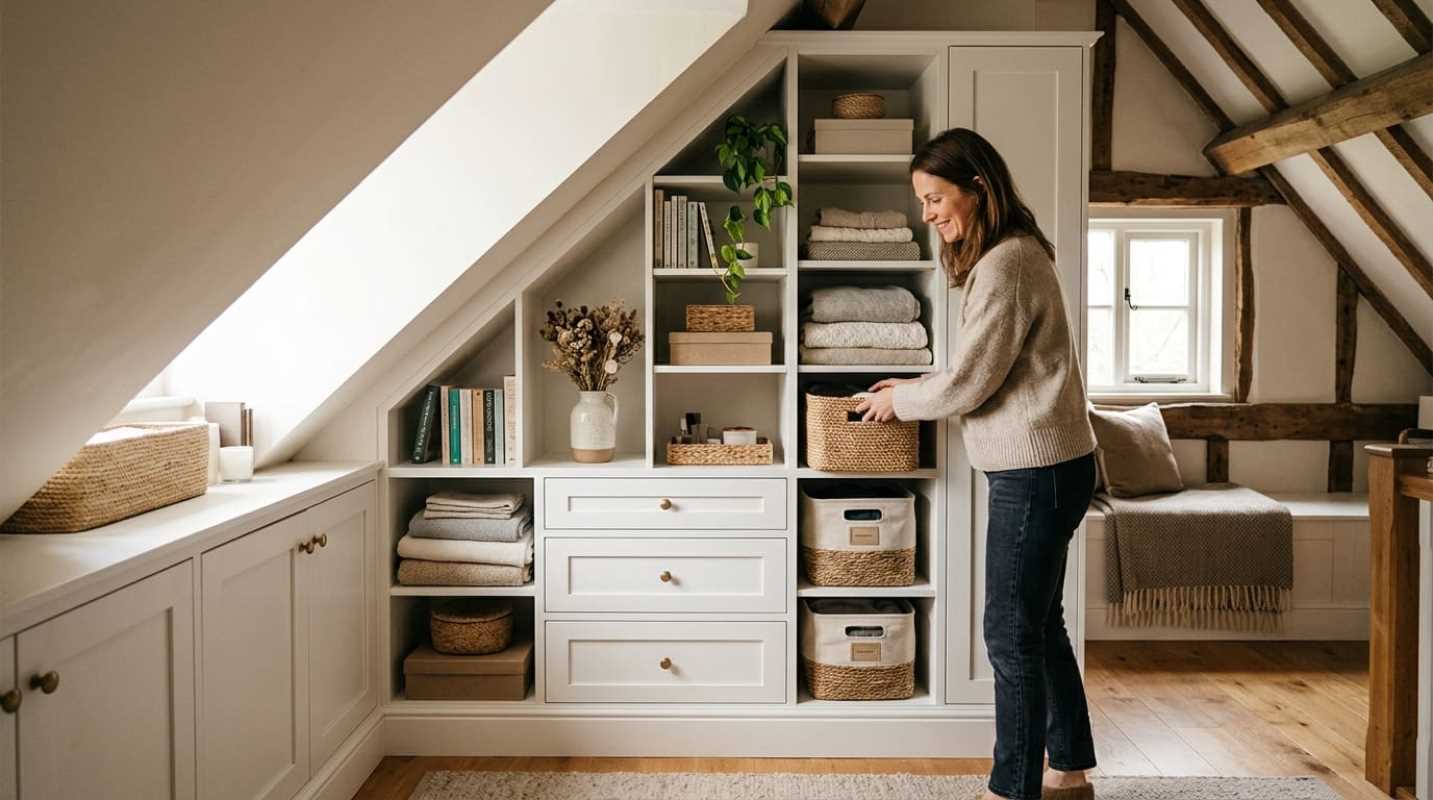
• The two-step return rule: if putting an item away takes more than two physical steps, it will usually end up on the counter. Ditch complex lids and latches in favor of open baskets, pull-out trays, and wall pegs.
• Point of use storage: store your everyday needs right where you use them, not where tradition dictates. Keep scissors in three different rooms if you use them in three different rooms.
• Categorized original packaging: avoid decanting dry goods into jars. Group store packages directly into deep, labeled bins so restocking takes seconds.
Future Proofing Your Space for Changing Routines
Your lifestyle today will not stay the same forever. You might take on full-time remote work, bring home a new pet, or take up a gear-heavy hobby. A functional layout adapts smoothly as your personal routines evolve.
Invest in flexible pieces that can handle shifting demands
• Modular seating setups: pick sectional sofas with movable pieces so you can split them into conversational clusters when friends visit or push them together for movie nights.
• Flexible workspaces: look for drop-leaf tables, fold-down wall desks, or rolling islands that expand during busy projects and tuck away when you need open floor space.
• Automated smart home features: set smart plugs and lighting schedules to dim down automatically at sunset, helping your mind switch from work mode to rest mode.
When you choose adaptable furnishings and smart controls, your space easily shifts between busy social weekends and quiet, productive workdays.
Your Home as a Living and Changing System
Building a home that fits your routine is an ongoing process. It rarely happens in a single weekend blitz. You test an arrangement, live with it for a couple of weeks, keep what works, and tweak what causes friction.
Permit yourself to break traditional decorating rules. If you never eat at a formal dining table, turn that room into an art studio, a home library, or a comfortable media den. Real estate labels do not dictate how you use your square footage.
Small, thoughtful adjustments to your floor plan pay massive dividends in your everyday peace of mind. When your rooms support your natural flow, you can stop fighting your house and start enjoying it.
Sources:
1. Functional Interior Design: Designing a Lived-in Home
https://www.chdinteriors.com/functional-interior-design-designing-a-lived-in-home/
2. Tired of Open Concept Noise? Meet the Broken Floor Plan Trend
https://blog.allentate.com/tired-of-open-concept-noise-meet-the-broken-floor-plan-trend/
3. Global Professional Organizer Market
https://datahorizzonresearch.com/global-professional-organizermarket-48860