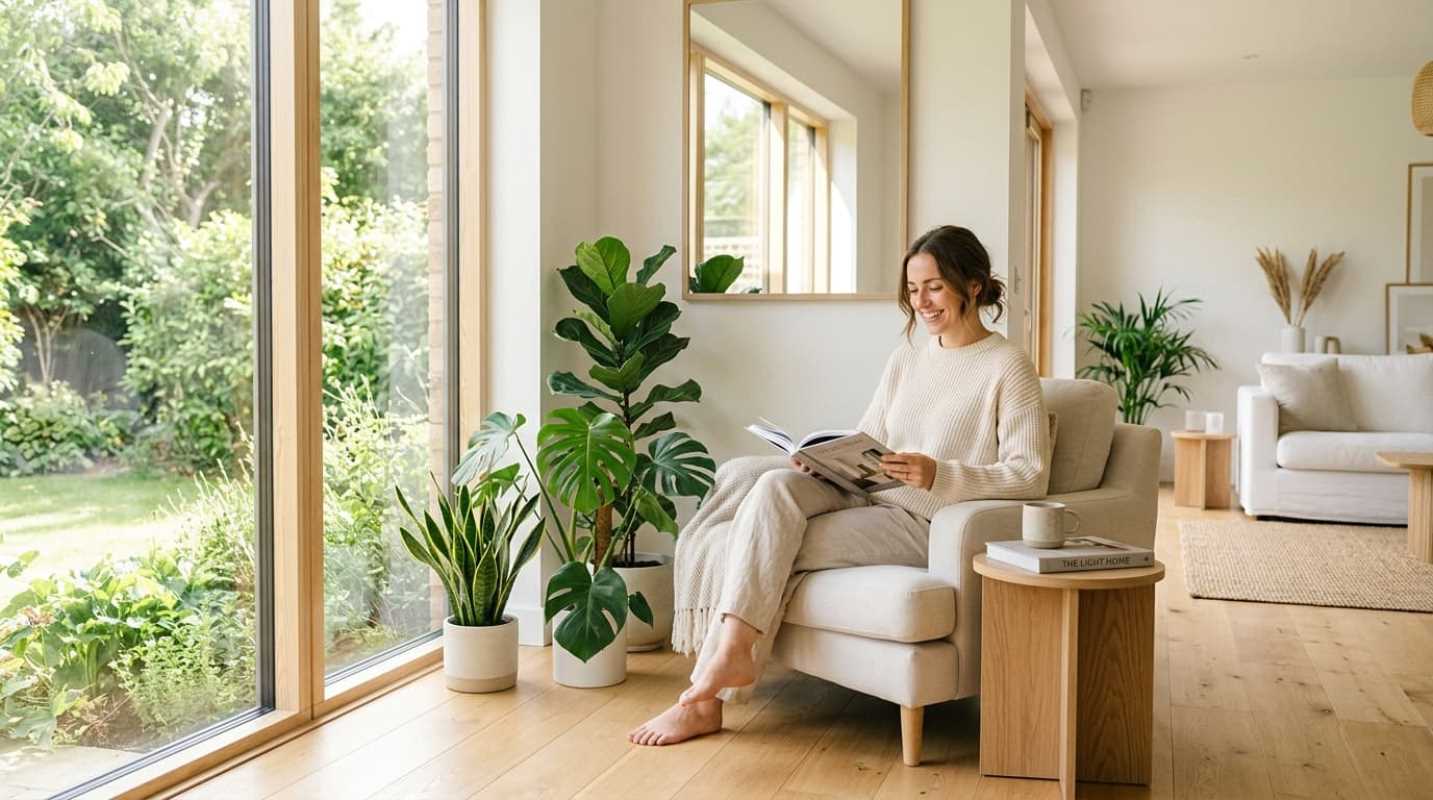
Have you ever walked into a room and instantly felt your mood drop, only to realize the space feels like a dim cave? You are not imagining things. The amount of daylight entering your living space directly shapes how you feel, how well you work, and how deeply you sleep at night.
A study from Northwestern Medicine and the University of Illinois revealed that people with adequate daylight exposure absorbed 173% more white light during the day and slept an average of 46 minutes longer each night.¹ Cornell University researchers also found that optimizing indoor daylight cuts down on eyestrain, headaches, and blurred vision by an astonishing 84%.
Yet many houses and apartments struggle to capture the sun. Architect Mohamed Boubekri discovered that natural daylight from standard perimeter windows drops off dramatically once you walk 20 to 25 feet into a building. If your rooms feel flat or dark, you do not need to knock down exterior walls to fix the problem. With a few intentional decorating decisions and minor architectural tweaks, you can pull that glorious sunshine straight into the heart of your living space.
Strategic Mirror Placement and Reflective Surfaces
Mirrors act like interior windows that double the reach of the sun. The key is knowing where to point them.
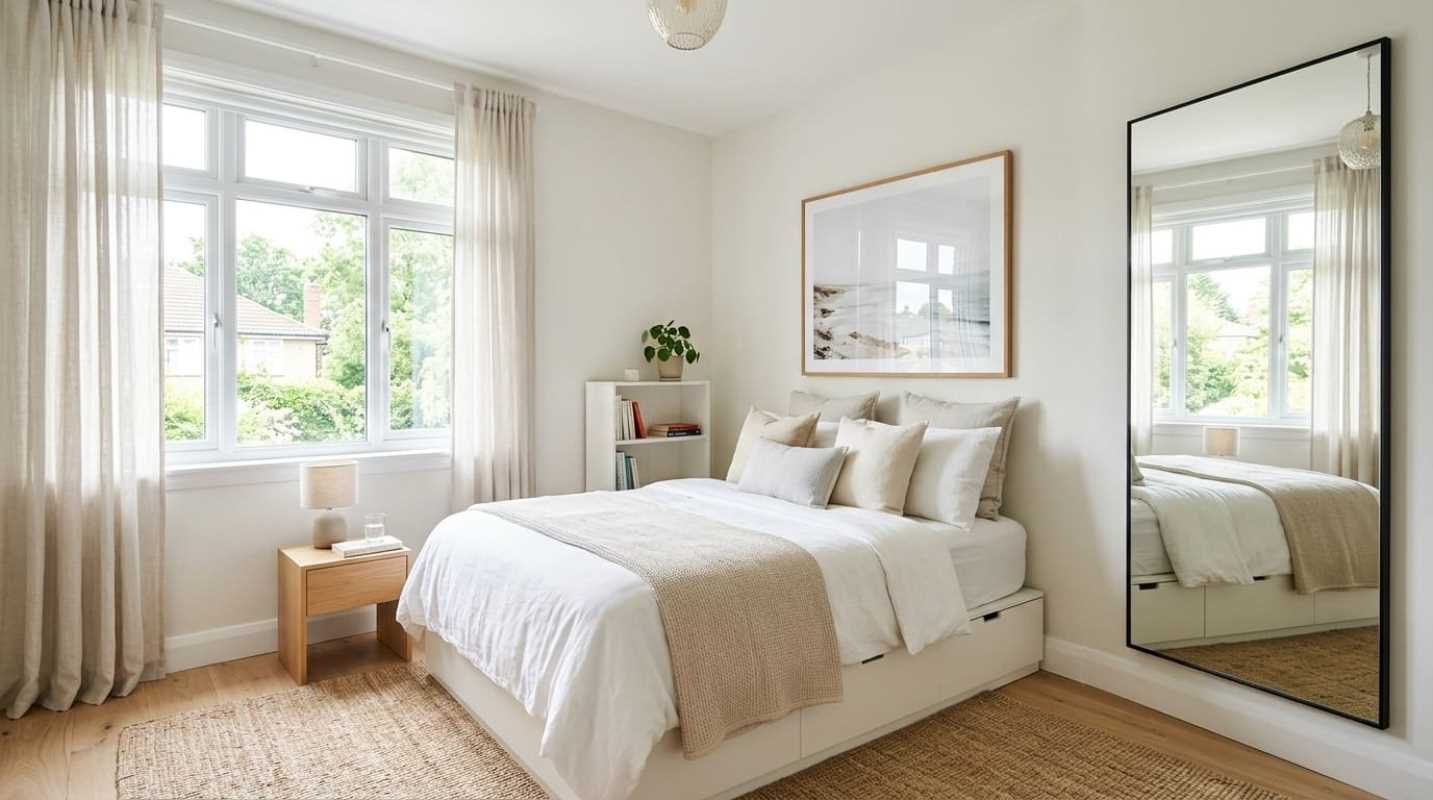
Many people make the mistake of hanging a giant mirror directly opposite a south-facing window. That sounds logical, but it often creates an uncomfortable glare bomb right in your line of sight. Instead, place mirrors on adjacent walls or at a 45-degree angle to incoming light. This bounces daylight across darker back walls without blinding anyone sitting on the sofa.
You can also use mirrors to trick the eye. Hanging an archtop or grid-paneled mirror opposite an interior doorway simulates an extra window and instantly opens up tight corridors.
Beyond wall decor, consider what your furniture is doing
• Glass and acrylic tops: Clear coffee tables and dining surfaces let daylight reach your floorboards instead of casting heavy ground shadows.
• High-sheen accents: Polished stones like quartzite, brushed brass hardware, and glossy lacquer trays catch perimeter light and scatter it around the room.
• Raised legs: Sofas and consoles with exposed, tapered legs allow daylight to slip underneath, keeping the room feeling airy.
Optimizing Your Window Treatments
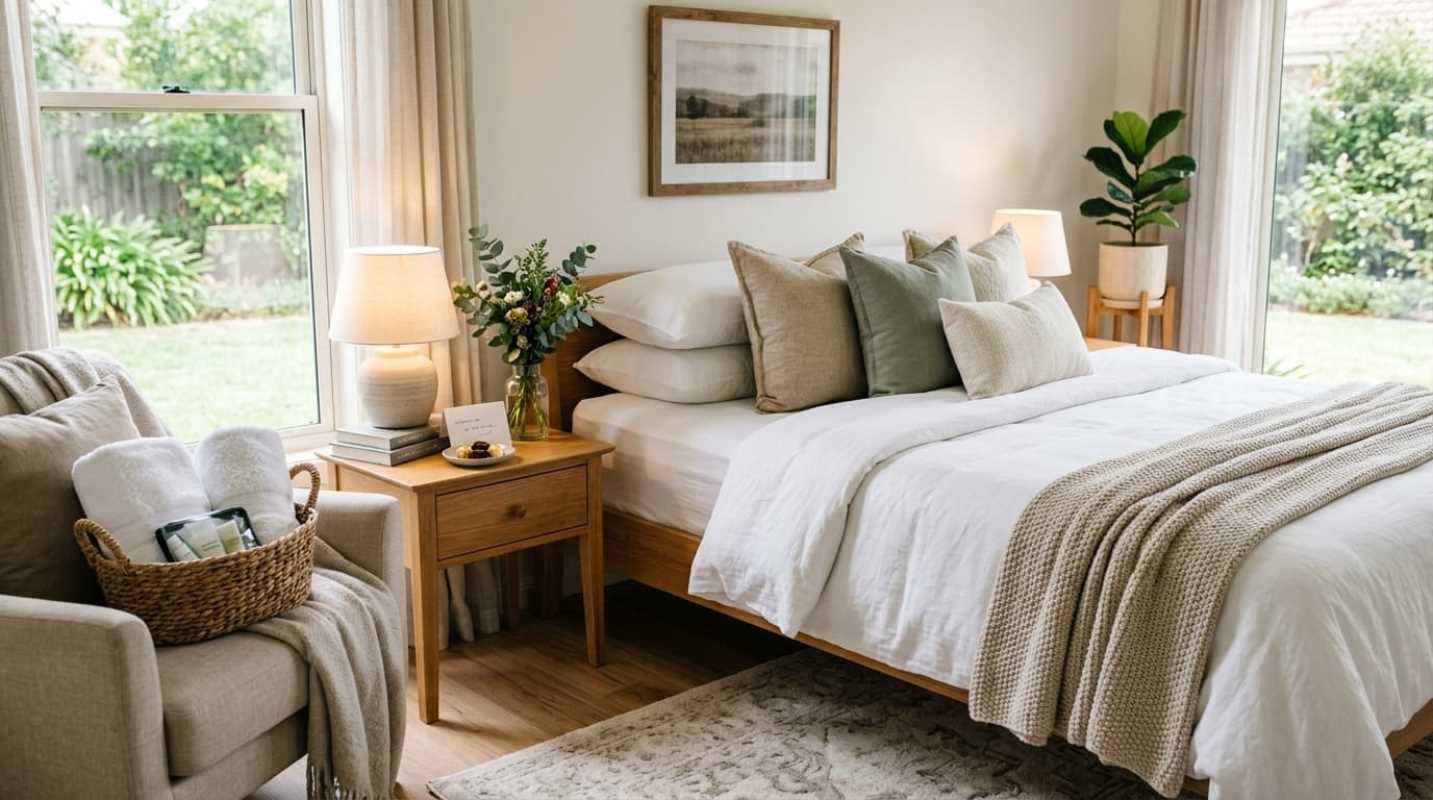
Your window treatments might be stealing a third of your natural light without you realizing it. Thick, dark drapes gather dust and swallow photons whole.
The first fix is pure geometry. Use the high and wide drapery rule. Mount your curtain rods 4 to 6 inches above the actual window frame, or tuck them directly below the ceiling molding. Next, extend the rod brackets 8 to 12 inches wider than the window on both sides. When you pull the curtains open in the morning, the fabric stacks completely against the drywall rather than blocking valuable glass panes.
Next, re-evaluate your fabric choices
• Translucent sheer voiles: Sheers give you daytime privacy from neighbors while still letting 70% to 80% of ambient light pour into the room.
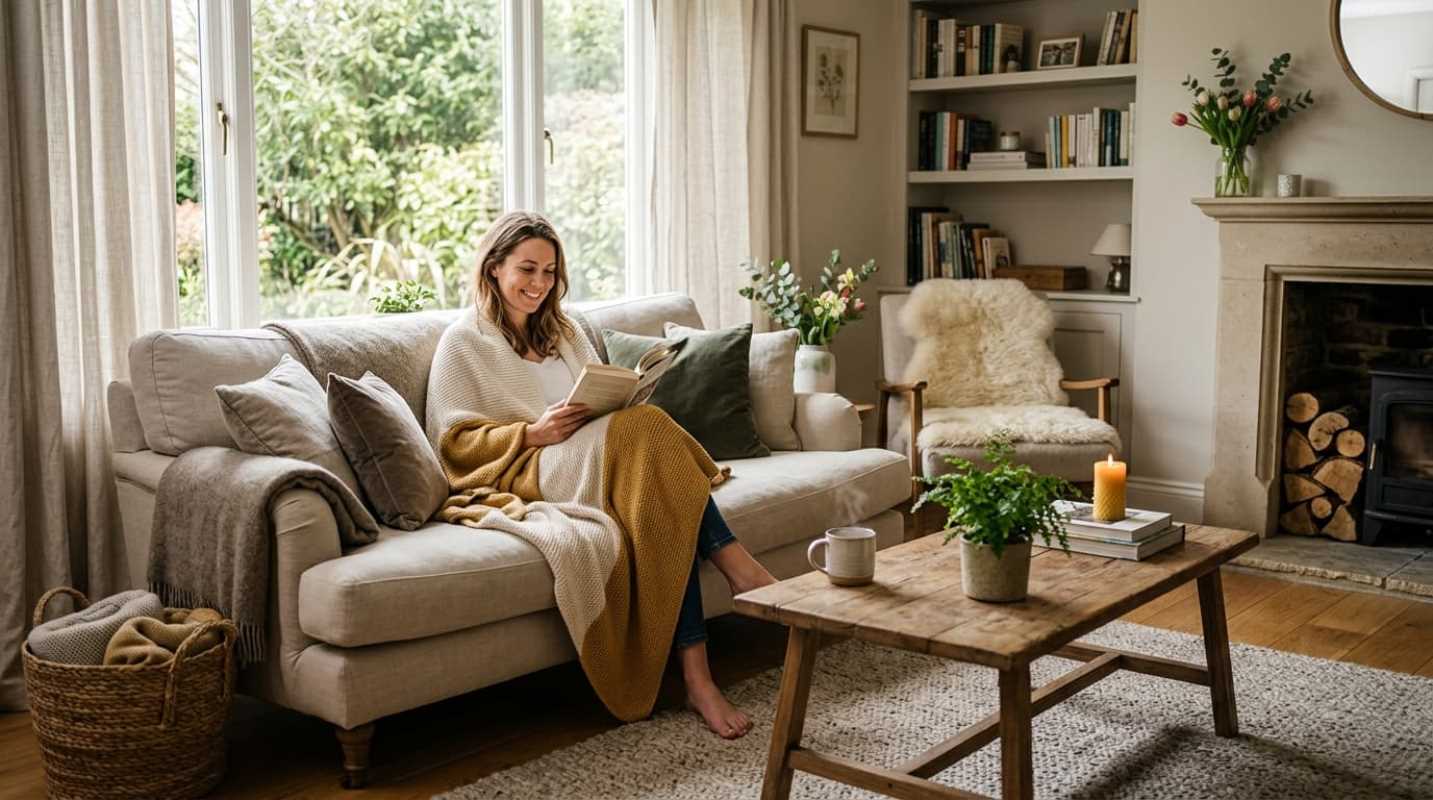
• Open-weave linen: Linen offers a soft texture and blocks harsh glare while bathing the space in a warm, diffused glow.
• Motorized solar shades: If you work from home, automated shades that lower during peak midday glare and raise during softer morning hours save you from constantly adjusting blinds.
The Role of Color and Texture
Paint is pure physics. Every paint color comes with a Light Reflectance Value, commonly known as LRV.² The LRV scale runs from 0 (absolute black, absorbing all light) to 100 (pure white, reflecting all light). Architectural paints generally sit between 3 and 92.
As a rule of thumb, any paint color with an LRV over 50 reflects more light into a room than it absorbs. If you are trying to rescue a dark, moody den, target wall colors with an LRV between 70 and 85.
Do not forget to match your paint undertones to the direction your room faces
• North-facing spaces: These rooms get cool, bluish light all day long. Stick with high-LRV warm whites containing soft yellow or peach undertones to neutralize the chilly cast.
• South-facing spaces: These rooms get drenched in intense, golden warmth. Cooler neutrals, soft greiges, or off-whites with subtle slate undertones keep the room calm during peak afternoon heat.
• The fifth wall trick: Always treat your ceiling as a light reflector. Painting your ceiling a flat, crisp white with an LRV of 85 or higher catches light bouncing up from the floor and scatters it back downward across the room.
Pair these paint choices with a thoughtful floor plan. Heavy furniture shoved against windows creates an immediate bottleneck. Maintain at least 18 inches of clearance between low window sills and your furniture to keep incoming rays moving freely across your floor.
Simple Architectural Adjustments
If you have a modest weekend budget or plan to tackle minor renovations, small architectural tweaks deliver massive improvements in daily luminosity.³
Start with your interior pathways. Solid wooden doors isolate rooms into dark pockets. Swapping a solid door for a glass-paneled pocket door allows daylight from an exterior-facing living room to spill into a windowless hallway.
Here are several architectural improvements worth considering
• Broken-plan glass partitions: Installing steel-framed or wood-framed glass dividers with reeded or fluted panes gives you acoustic privacy for a home office while allowing up to 80% of daylight to pass through.
• Tubular skylights: Often called sun tunnels, these devices use reflective interior ducting to channel daylight up to 30 feet from your roof into dark closets, mudrooms, or bathrooms.
• Flared skylight wells: If you already have skylights, flaring the interior drywall shaft outward at an angle distributes sunlight across up to 40% more floor space compared to a standard straight box frame.
• Basic window maintenance: Do not overlook routine cleaning. Layered pollen, dust, and exterior water spots can block 10% to 20% of usable daylight. A thorough quarterly cleaning immediately brightens the room.
• Landscaping trim: Walk outside and inspect your perimeter. Pruning back overgrown shrubs or low-hanging tree branches shading southern and eastern windows gives you an instant boost in solar gain.
Embracing a Brighter Lifestyle
Getting the most from daylight indoors is not an all-or-nothing project. You do not need to knock down structural walls or live inside a sterile white box to feel the difference.
Start small this weekend. Hang your curtain rods higher and wider. Pull your favorite armchair back 18 inches from the window. Angle a mirror to catch morning light. These incremental adjustments compound quickly, turning a dark living area into an energizing, sun-filled sanctuary that supports your health, productivity, and peace of mind every single day.
Sources:
1. Impact of Workplace Daylight Exposure on Sleep and Quality of Life
https://sciencedaily.com/releases/2014/08/140808124010.htm
2. Understanding Light Reflectance Value in Interior Design
https://diamondvogel.com/architectural/blog/what-is-lrv
3. Getting the most from Natural Light in Modern Residential Spaces
https://akerdevelopment.com/natural-light-in-homes-2025/