Step outside for a second and take a look around your yard. Does it invite you to pull up a seat and exhale, or does it feel like an unfinished chore? For a long time, people designed their yards with future home buyers in mind. We installed sensible lawns and generic patios that looked tidy in real estate photos but felt cold on a Saturday afternoon. Today, that mindset has flipped completely. Recent research from Houzz shows that the share of homeowners renovating backyards specifically for resale value dropped to just 15%, while those upgrading for everyday personal comfort climbed to 25%.¹
We want sanctuaries. We want spaces that let us escape our screens, sip a morning coffee, and listen to the birds without feeling like we are sitting on display.
You do not need an acre of land or an endless bank account to pull this off. You just need a thoughtful approach to comfort, layout, and sensory details. With a few intentional choices, any patio, deck, or humble patch of grass can become the most restorative room on your property.
Defining Your Zone for Flow and Comfort
When you walk into a great living room, you instinctively know where to sit, where to set your drink, and how to move through the space. Your backyard should work the same way. Instead of scattering random chairs across an open patio, think about micro-zoning.
Micro-zoning simply means dividing your outdoor area into specific pockets of activity. Even in a modest yard, you can carve out two or three distinct spots
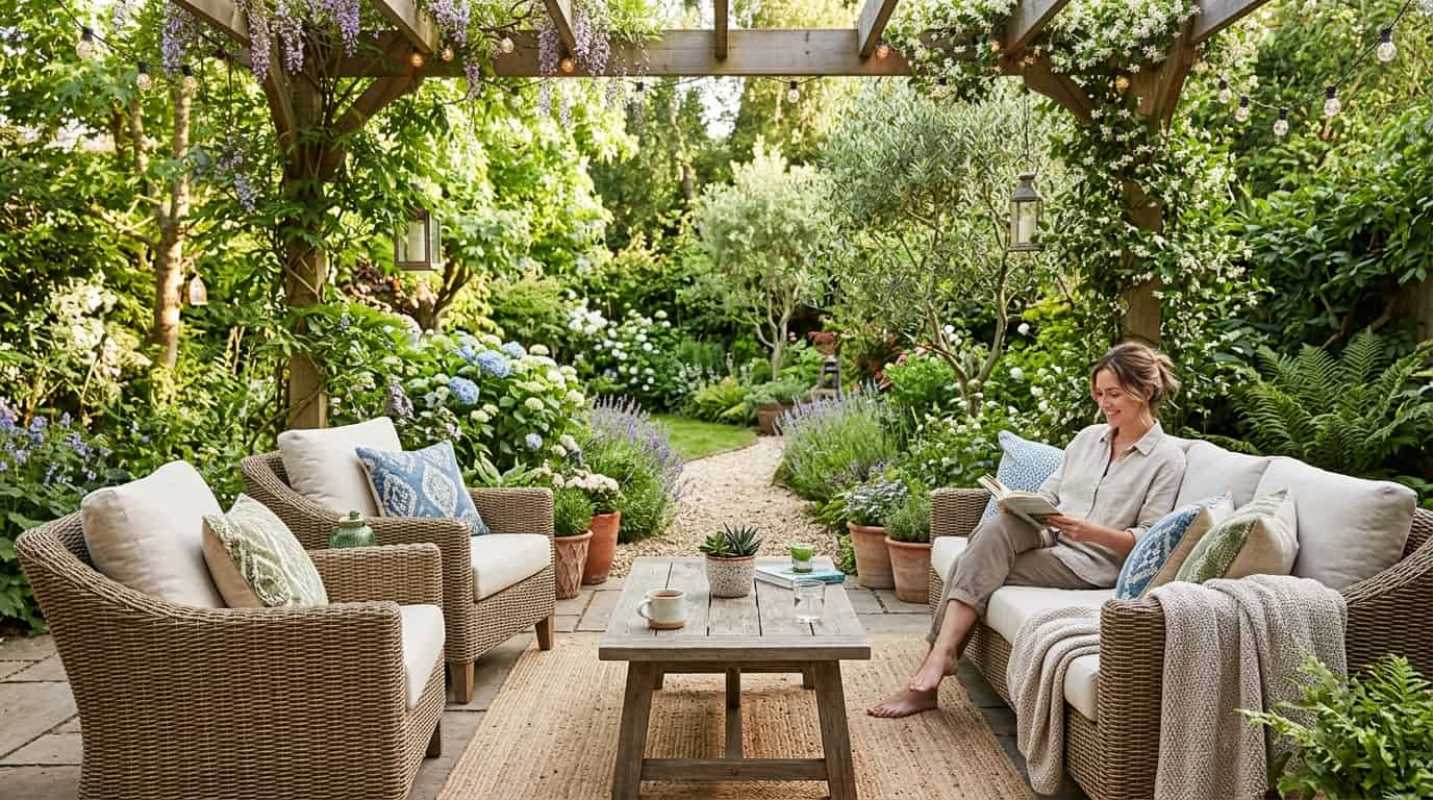
• The Primary Lounge: A spot anchored by deep seating where you can stretch out with family or friends. Houzz found that 83% of renovated outdoor spaces now prioritize a dedicated lounge area, with 71% opting for indoor-style sofas or deep armchairs.²
• The Quiet Retreat: A secluded corner tucked away from the main door. You can place a single hammock, a hanging egg chair, or a cushioned bench beneath a small tree. More than half of outdoor renovators now build dedicated reading or meditation nooks.³
• The Alfresco Dining Hub: A dedicated eating space set close to the back door so carrying plates back and forth does not become a balancing act.
Pay close attention to natural foot traffic. If you have to squeeze past a sharp table corner to reach the lawn, the space will feel cluttered. Look for curved silhouettes and rounded furniture edges. Soft curves open up walking paths and instantly make an outdoor space feel softer and more relaxing.
Textiles and Lighting Secrets for Real Coziness
If your patio furniture feels stiff, nobody will spend time outside. Hard metal frames and paper-thin cushions belong in the past. To build a genuine haven, your outdoor seating needs the same plush, forgiving comfort you expect inside your house.
Modern performance textiles make this easy. High-end solution-dyed acrylics hold up against harsh sun and sudden rain showers, yet they feel as soft as indoor linen or textured cotton. Add weather-resistant throw pillows and a durable flat-weave outdoor rug beneath your seating group. An outdoor rug works wonders because it visually frames the seating area and keeps bare feet off cold stone or splintered wood.
Then comes lighting, which makes or breaks the evening mood. Harsh floodlights kill relaxation instantly. Instead, build soft layers of warm illumination
• Low-Level Path Lights: Place gentle fixtures along walkways and garden beds to guide steps without blinding anyone.
• Canopy Uplighting: Direct subtle spotlights upward into tree branches to create a soft, warm ceiling of light above your seating area.
• Tabletop Lanterns: Scatter portable, battery-powered or solar lanterns on side tables to provide intimate, amber light right where you sit.
Stick to warm color temperatures around 2700K. Warm light signals to your brain that it is time to wind down, making your patio the ideal place to reset after a frantic workday.
Biophilic Design and Bringing Nature In
Relaxation is not just about what you see or sit on. It is about what you hear, smell, and touch. Designing with nature in mind, often called biophilic design, uses living elements to lower your stress levels naturally.
Start with acoustic privacy. Traffic noise, barking dogs, and humming air conditioners pull you straight out of a peaceful state of mind. You can mask those irritations by adding running water. A small recirculating fountain, a bubbling stone urn, or a slim water wall produces constant white noise that drowns out the neighborhood.
Next, think about greenery. Strategic planting provides natural privacy screens that look much friendlier than a tall wooden fence
• Tall Ornamental Grasses: Varieties like feather reed grass sway in the wind, creating soft movement and a gentle rustling sound.
• Aromatherapy Herbs: Plant lavender, rosemary, and mint in pots right next to your seating. Every time you brush past them, they release calming scents into the air.
• Layered Potted Plants: Group containers of different heights filled with hardy ferns, hostas, or small Japanese maples to build lush, green walls around your seating.
Stick to low-maintenance native plants. If your garden demands three hours of weeding every Saturday, it stops being a sanctuary and turns into another chore on your to-do list.
Needed Additions for Year-Round Enjoyment
A great outdoor space should not sit abandoned for half the year. If you plan for changing weather, you can use your yard from the first cool breezes of spring all the way through late autumn.
Start with climate control. During peak summer heat, shade is non-negotiable. A motorized louvered pergola, a retractable awning, or a wide cantilever umbrella shields you from intense afternoon rays. For chillier evenings, an open flame changes everything. A gas fire table or a compact wood-burning fire pit provides instant warmth and acts as a natural gathering point where people linger for hours.
Finally, bring your personal style outside. Treat your outdoor area like a genuine room. Hang weather-safe wall art on an exterior fence, add ceramic garden stools as flexible drink perches, and keep a basket of washable fleece blankets near the door for chilly nights.
Living Your Best Life Outdoors
Building an outdoor retreat does not require tearing up your entire yard all at once. You do not need to install an elaborate outdoor kitchen or a luxury pool to feel the benefits.
Start small. Buy a genuinely comfortable chair, put down a soft outdoor rug, and set a potted lavender plant on a small side table. Sit out there tomorrow morning with a warm drink and notice how your body responds to the fresh air and quiet.
Once you get a taste of how restorative a few moments outdoors can be, you can add more pieces over time. Shape the space around how you actually live, keep comfort at the center of every choice, and enjoy your new personal haven.
Sources:
1. Homeowners Are Designing Outdoor Spaces for Living, Not Listing
https://www.houzz.com/press/1019/Homeowners-Are-Designing-Outdoor-Spaces-for-Living-Not-Listing-Houzz-Study-Finds
2. 2026 U.S. Houzz Outdoor Trends Study
https://www.houzz.com/magazine/2026-u-s-houzz-outdoor-trends-study-stsetivw-vs~185306879
3. Outdoor Living Trends 2025: Homeowner Guide
https://michrose.com/outdoor-living-trends-2025-homeowner-guide/